Creating a weekly meal plan can feel overwhelming at first, but it’s a fantastic way to simplify your week, save money, and make healthier food choices. Whether you’re cooking for one or a whole family, a well-organized meal plan can reduce the daily “What’s for dinner?” question and help you stay on track with your goals.
In this post, we’ll walk you through the basic steps to create a simple weekly meal plan that fits your lifestyle and preferences.
Why Create a Weekly Meal Plan?
Planning your meals in advance has several benefits:
– Saves time and reduces stress: Knowing what you will cook each day eliminates last-minute trips to the grocery store.
– Helps with budgeting: Buying only what you need minimizes food waste and unnecessary spending.
– Supports healthier eating: Planning meals allows you to balance nutrition effectively.
– Improves variety: You can try new recipes without feeling overwhelmed.
Step 1: Assess Your Week
Before you start writing your meal plan, think about your schedule:
– How many meals do you need to plan? (Breakfast, lunch, dinner, snacks)
– Do you have any special events or days you’ll be eating out?
– How much time do you have for cooking each day?
– Are there any dietary preferences or restrictions to consider?
Knowing this helps customize the plan to your actual needs.
Step 2: Choose Your Recipes
Pick simple recipes that suit your taste and time availability. Some tips:
– Aim for meals that use similar ingredients to minimize shopping.
– Include some quick meals for busy days.
– Consider batch cooking or leftovers to save time.
– Balance protein, veggies, and carbohydrates to create nutritious meals.
Here’s an example list to start with:
– Grilled chicken with roasted vegetables
– Pasta with tomato sauce and spinach
– Stir-fried tofu with rice and broccoli
– Omelet with mushrooms and peppers
– Quinoa salad with beans and avocado
Step 3: Create a Template
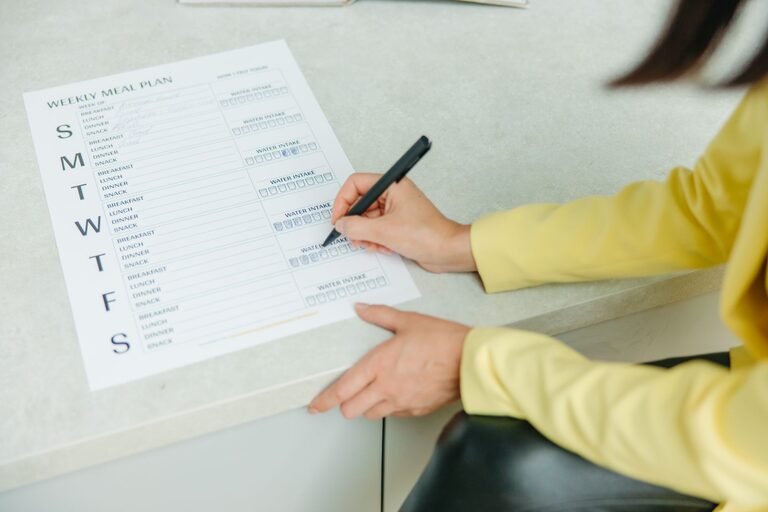
Use a simple grid or table with days of the week and meals (breakfast, lunch, dinner). This can be on paper, a spreadsheet, or a meal planning app.
Example:
| Day | Breakfast | Lunch | Dinner |
|———–|—————-|——————–|———————-|
| Monday | Oatmeal + fruit| Turkey sandwich | Grilled chicken + veg|
| Tuesday | Yogurt + nuts | Salad + quinoa | Pasta + tomato sauce |
| … | … | … | … |
Step 4: Make a Grocery List
Once your meals are listed, make a grocery list organized by categories like produce, dairy, meat, pantry items, and so on. This lets you shop quickly and avoid missing anything.
Step 5: Prep in Advance
If possible, prepare some ingredients or meals ahead of time:
– Chop vegetables and store them in containers.
– Cook grains or proteins in batches.
– Portion snacks for easy access.
This reduces cooking time on busy days.
Tips for Keeping Your Meal Plan Flexible
While a meal plan is helpful, sometimes you need to adjust:
– Swap meals between days if your schedule changes.
– Use leftovers creatively to avoid food waste.
– Don’t be afraid to try new recipes or repeat favorites.
Sample Simple Weekly Meal Plan
| Day | Breakfast | Lunch | Dinner |
|———–|————————|————————-|—————————|
| Monday | Smoothie bowl | Chicken salad wrap | Baked salmon + asparagus |
| Tuesday | Whole grain toast + egg| Lentil soup | Stir-fried veggies + rice |
| Wednesday | Yogurt + granola | Turkey sandwich | Spaghetti with meat sauce |
| Thursday | Oatmeal + banana | Quinoa salad | Chicken stir-fry |
| Friday | Pancakes + berries | Leftover salad | Homemade pizza |
| Saturday | Scrambled eggs + toast | Tuna salad | Veggie chili |
| Sunday | French toast | Grilled cheese sandwich | Roast chicken + veggies |
Final Thoughts
Starting a weekly meal plan doesn’t have to be complicated. Begin with simple recipes, plan realistically, and adjust as needed. Over time, it will become a natural part of your routine that saves you time, money, and daily stress.
Happy planning and happy eating!
About the Author